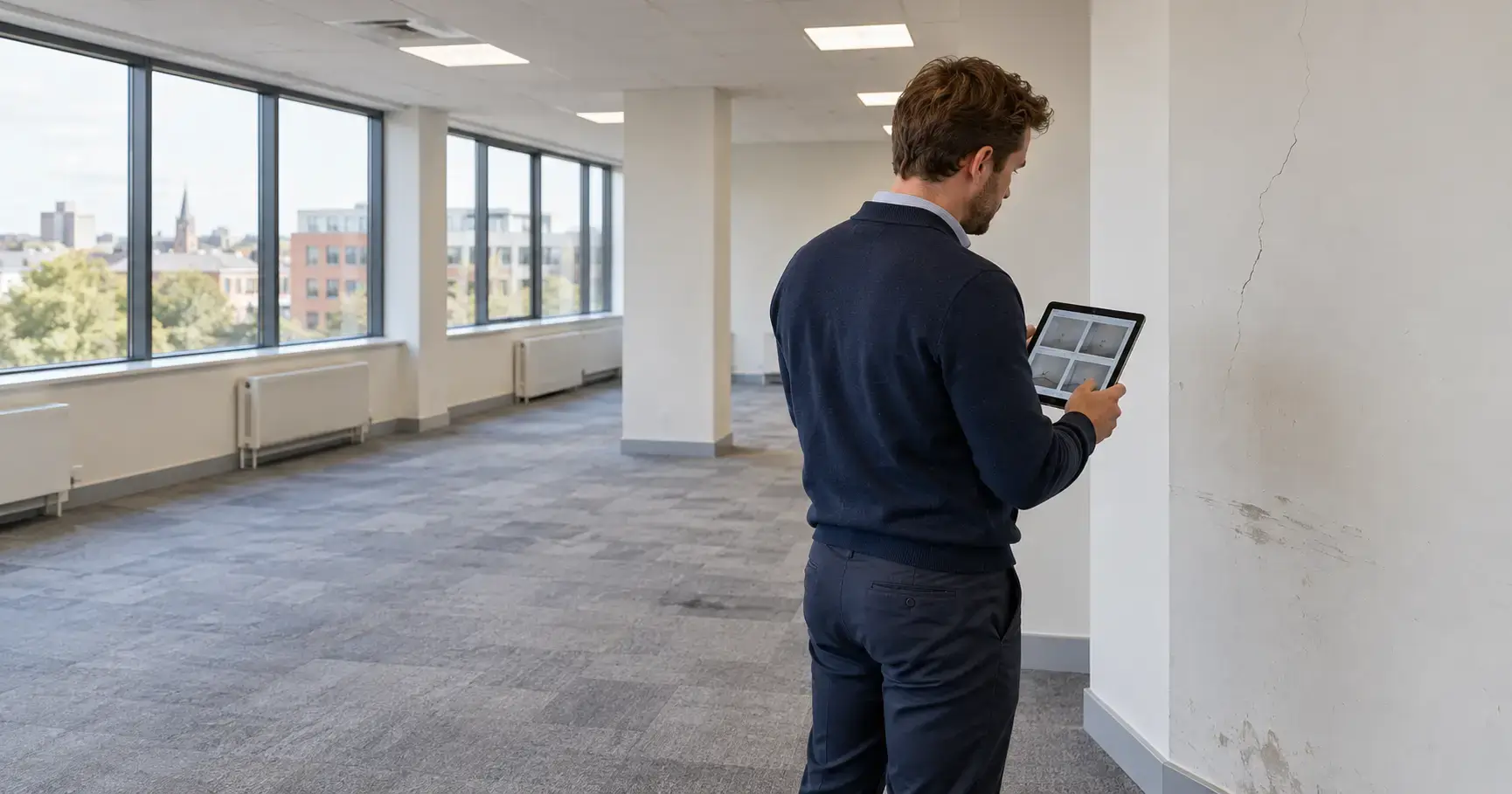
If you’re taking on a commercial lease, there’s a good chance your solicitor or agent has mentioned a Schedule of Condition without fully explaining what it does. It’s easy to file it away as one more piece of paperwork in an already long list. It shouldn’t be – it’s one of the few documents that actively protects you rather than just recording the deal.
The short version
A Schedule of Condition is an independent, dated record of what state a property was in before you moved in – written description plus photographs, covering the structure, fixtures, fittings and finishes. It’s prepared by a surveyor, not by you or your landlord, which is what gives it weight if a dispute ever comes up.
Once it’s finished, it gets annexed (attached) to the lease. From that point on, it’s not just a nice-to-have record sitting in a drawer – it’s part of the legal agreement between you and your landlord.
Why it exists in the first place
Most commercial leases make the tenant responsible for repairs – often under what’s called an FRI lease (Full Repairing and Insuring), which can mean you’re liable for the condition of the whole building, not just your own unit. Without anything pinning down what condition the property was in when you arrived, “repair” has no fixed starting point.
That’s the gap a Schedule of Condition closes. It doesn’t remove your repairing obligations – it just makes sure they only ever apply to damage or deterioration that happened on your watch, not the wear, cracks, or ageing finishes that were already there.
What it actually covers
A thorough Schedule of Condition typically includes:
- Walls, ceilings, and floor finishes
- Doors, windows, and frames
- Fixtures, fittings, and joinery
- Kitchen and sanitary facilities
- Visible structural elements
- External areas, where relevant
The level of detail matters here. A handful of wide-angle photos and a paragraph of generic description won’t hold up if a landlord’s surveyor challenges it years later. A proper report is room-by-room, element-by-element, with enough photographic evidence that nobody can credibly argue about what it shows.
Where it actually gets used
Two moments, mainly:
At lease end. This is the big one. When you hand the property back, the landlord’s outgoing surveyor will assess its condition against your repairing obligations. If there’s a Schedule of Condition, your liability is capped at “no worse than this.” If there isn’t, you’re arguing from memory against someone whose job is to find things to charge you for.
During the lease, if anything’s disputed. Water damage, structural movement, disagreements over who’s responsible for what – a dated baseline record settles arguments that would otherwise come down to one party’s word against another’s.
Who actually needs one
In practice: any tenant taking on an FRI lease, especially in an older building, an industrial unit, or anywhere the existing condition is anything less than pristine. Landlords benefit too – a Schedule of Condition protects their asset’s documented state and removes ambiguity from the relationship, which tends to make for a smoother tenancy on both sides.
The properties where it matters least are new-build units with a short lease and minimal existing wear. Even then, it’s cheap insurance against a dispute that costs far more to resolve than the report would have cost to commission.
The bottom line
A Schedule of Condition doesn’t stop things from wearing out – nothing does. What it stops is you paying for wear and tear that was never yours to begin with. Given how one-sided dilapidations claims can be without independent evidence, it’s a small upfront cost against a potentially expensive dispute later.
Need a Schedule of Condition before you sign? Get a fixed-fee estimate in under 30 seconds at leasesoc.co.uk – commercial properties inspected nationwide.